Company
One of Europe’s leading steel producers. Mobile repair crews maintain the hot-strip rolling mills at the Duisburg site.
How the mobile repair teams at thyssenkrupp Steel Europe in Duisburg used SIMPL to digitize their planning, automate the SAP integration, and reduce planning time from 45 minutes to just a few minutes.

One of Europe’s leading steel producers. Mobile repair crews maintain the hot-strip rolling mills at the Duisburg site.
Planning was paper-based; order data was manually transferred from SAP. Coordination took place via email and phone; information often arrived too late, and documentation was time-consuming.
Automatic SAP integration, digital planning board, reports at the click of a button. Planning in minutes instead of nearly an hour.
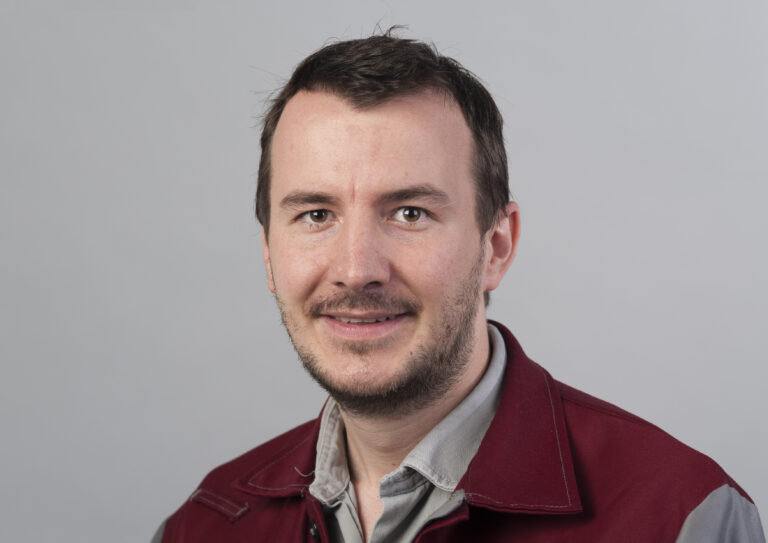
In the past, you had to go through everything manually, but now it’s much easier. SIMPL takes so much work off our hands—we can keep track of capacity, run reports, and finally have a tool that helps us do our jobs right. Without this solution, we simply wouldn’t be able to handle the workload today.
thyssenkrupp Steel Europe AG is one of Europe’s leading steel producers. In the area of mobile maintenance operations, the company maintains, among other things, the hot strip mills at the Duisburg site, where flat steel is produced. The goal was to transition the planning and execution of maintenance activities from paper-based processes to a fully digital solution.
Before SIMPL was introduced, operations and order planning relied heavily on manual processes. Although the most important order data was retrieved from the SAP system, further planning and documentation were carried out almost entirely by hand: on paper, by making additions to PDFs, and through countless back-and-forth exchanges via email or phone.
Important information often arrived too late, which made it difficult to respond quickly. Ad-hoc planning or last-minute adjustments were only possible with a great deal of effort. Documentation took up an enormous amount of time and led to unnecessary chaos. Internally, a colleague summed it up: It somehow worked, but it was more of a struggle than anything else.
SIMPL was introduced for site managers in the mobile repair shop sector and further developed specifically to meet the requirements of the steel mill.
Order and equipment data from the SAP system is automatically transferred to SIMPL. The manual initial data entry that was previously required for each order is completely eliminated. This eliminates an error-prone manual interface and saves time on every order.
Maintenance and servicing tasks can now be planned efficiently and assigned to colleagues in a targeted manner. What used to take 45 minutes per job is now completed in just a few minutes. This pays off especially when it comes to last-minute adjustments—such as when a hot-strip mill experiences an unplanned shutdown: Changes are visible in real time, without the need for phone chains or email threads.
Capacity utilization metrics can now be calculated with precision. The team is able to plan future activities much more effectively because data on past assignments, capacities, and workloads is systematically recorded and analyzed, rather than getting lost in paper files.
All functions are accessible directly from anywhere on the construction site via mobile devices. Site managers no longer have to return to the office to retrieve information or adjust plans; they have everything they need right there on their tablets.
What used to take 45 minutes to plan an order now takes just a few minutes
The digital planning board replaces the manual review process.
Manual SAP maintenance was replaced by an automated integration
Order data is transferred automatically without manual entry.
From gut instinct to data-driven maintenance
Utilization, capacity, and history at the touch of a button.
A noticeable reduction in stress within the team
No more paperwork—more time for actual maintenance work instead of organizational overhead.
saved per order during the planning phase.
Manual SAP transfer per order.
instead of gut feelings.
Dortmund | © 2026 SIMPL Technologies GmbH