



Die EU führt den digitalen Produktpass Schritt für Schritt ein. Wer seine Produktdaten erst dann strukturiert, wenn der eigene Rechtsakt da ist, kommt zu spät.
Digital Product Passport Software (DPP)
Your machine's digital record, ready for the product passport
Die durchgängige Erfassung von Produktdaten über den gesamten Lebenszyklus hinweg ist entscheidend für den reibungslosen Betrieb von Maschinen und Anlagen – insbesondere im Hinblick auf Wartung, Instandhaltung und Serviceeinsätze. Erfahre, wie SIMPL den Digital Product Passport (DPP) in der Praxis umsetzt – gefördert durch das Land Nordrhein-Westfalen und die Europäische Union.

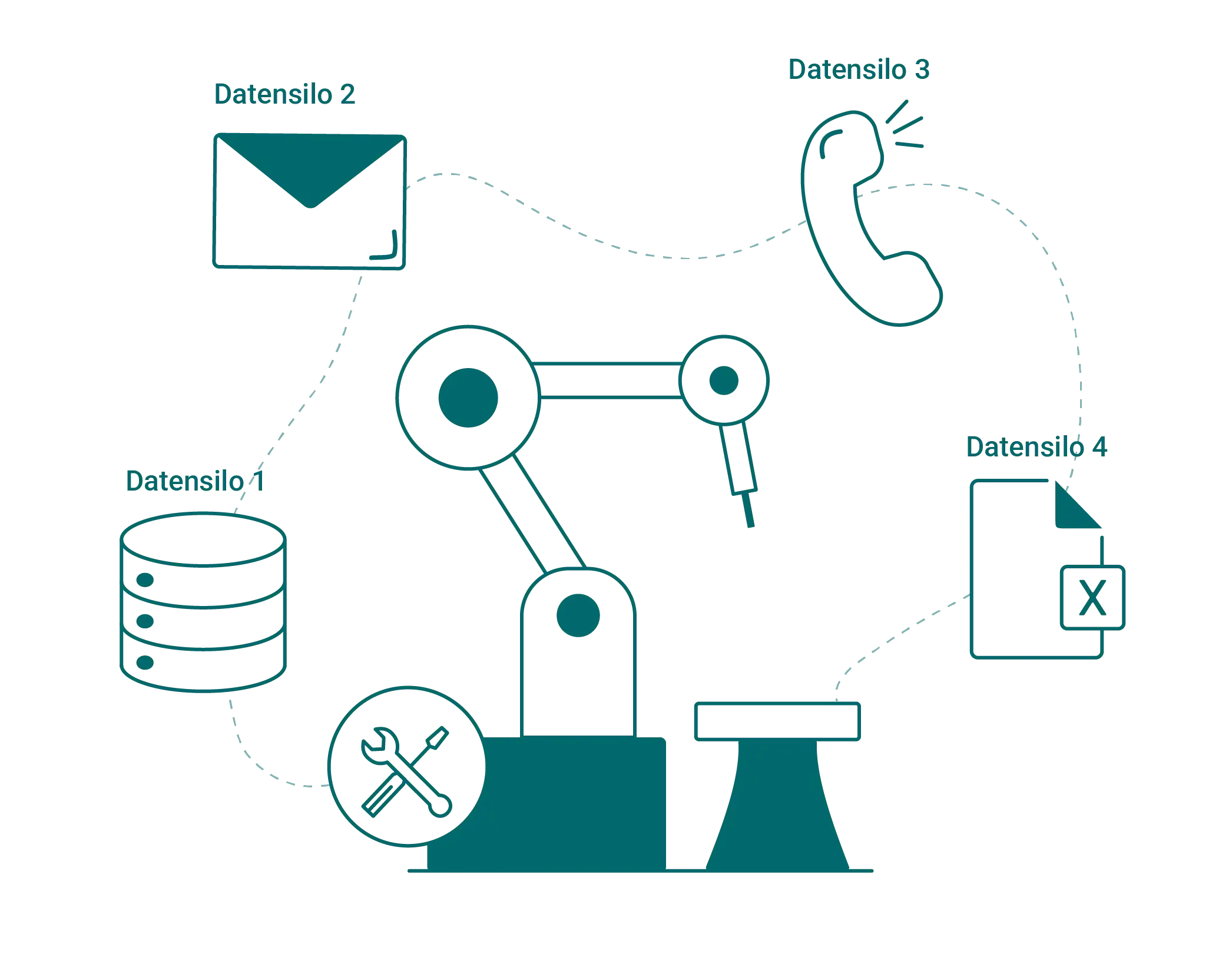
The product passport is coming. Your product data is stored in folders.

Product data scattered across ERP systems, Excel, and hard drives
User manuals as stacks of paper and PDF attachments
What happens after delivery is not recorded anywhere
Customers and lawmakers are calling for digital proof
The EU's Roadmap for the Digital Product Passport
As of July 2026 · Deadlines may be extended, but not moved up
Seit 07/2024
Ecodesign Regulation (ESPR) in Effect: Legal Basis for the Digital Product Passport
Ab 07/2026
Plans for a Central EU Registry for Digital Product Passports
Relevant for Mechanical Engineers
20.01.2027
The EU Machinery Directive applies: Operating instructions may be provided in digital form
18.02.2027
Battery Passport Becomes Mandatory—the EU's First Mandatory Product Passport
2026 ff.
Additional product groups to be phased in by legislative act; iron and steel expected first

From a file folder to a product file with an identifier
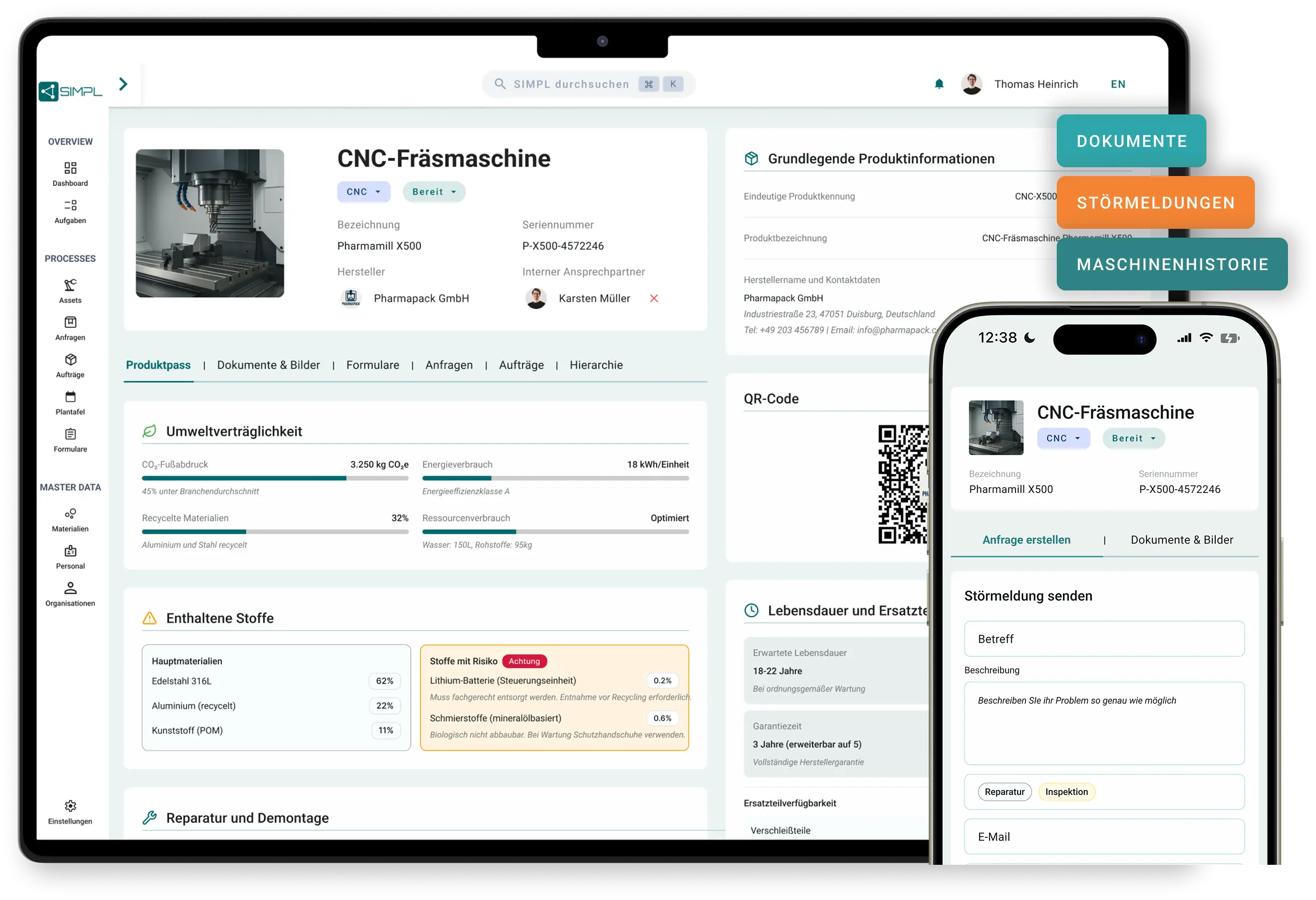
Ein digitaler Produktpass ist eine standardisierte Produktakte mit eindeutiger Kennung. In SIMPL bekommt jede Maschine genau das, schon heute.

Unique ID and QR code for each machine, ex works
Structured Properties with units and validation
Documents classified by type, language, and version
The Foundation of Today, the Passport of Tomorrow
SIMPL is expanding the digital machine file into a product passport, in steps that pay off immediately.
Digital Nameplate
Ein Scan am Produkt, alles auf einen Blick
The QR code on the machine opens the public product page: manufacturer, serial number, technical specifications, and approved documents—no login or app required.

Digital nameplate with master data and technical specifications
Inquiries and spare parts orders go straight to you
A completeness check shows what’s still missing from the passport
„Customers can submit inquiries directly using the QR codes on the machines, and the tedious task of printing out manuals is finally a thing of the past.“

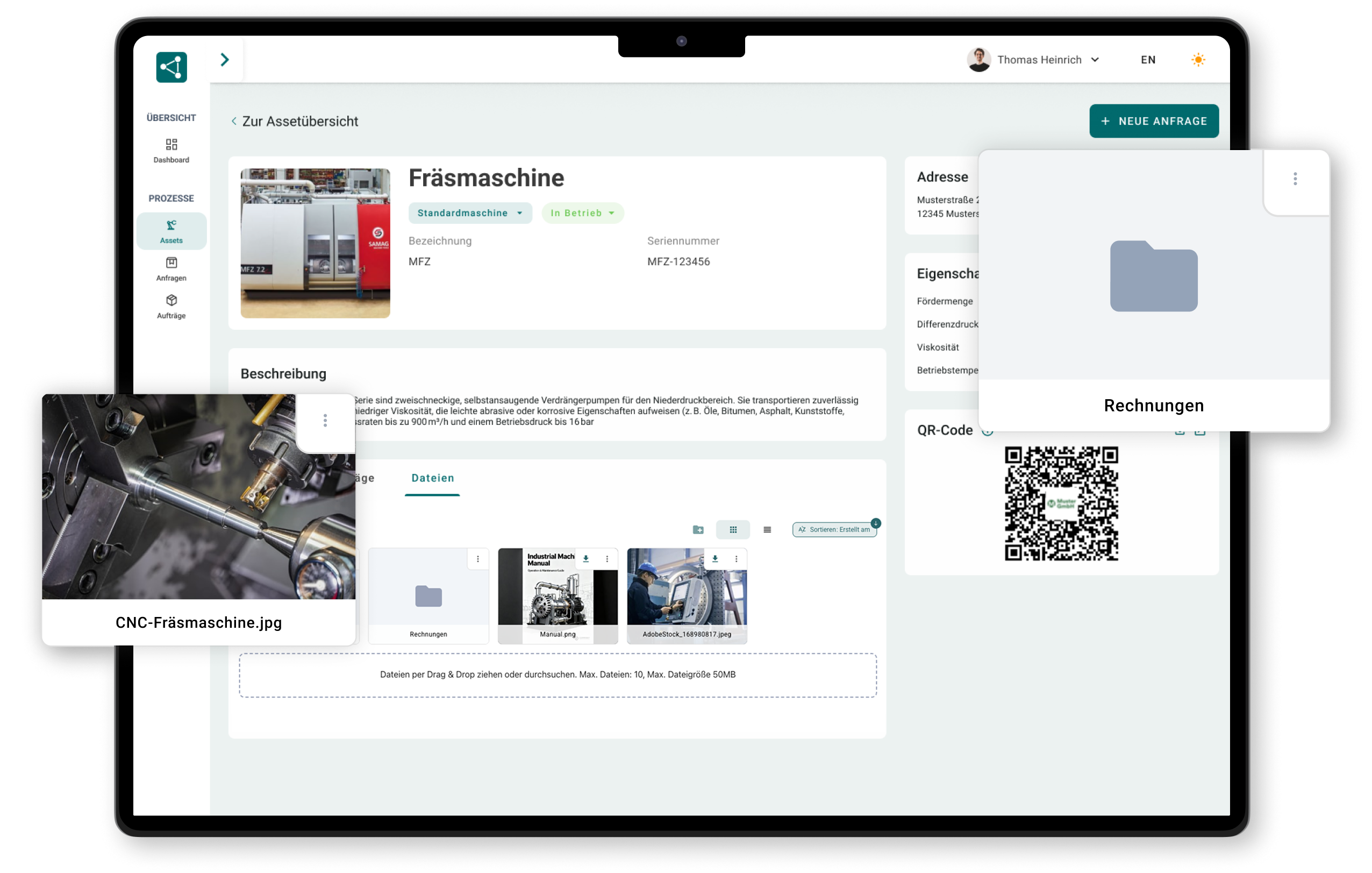
Digital User Manuals
Bereit für die Maschinenverordnung 2027
Ab dem 20. Januar 2027 dürfen Betriebsanleitungen digital mitgeliefert werden. In SIMPL liegen sie versioniert an der Maschine, abrufbar per QR.
Documents with type, language, and version, e.g., operating instructions
Once entered for a machine type, it applies to the entire series
The new version replaces the old one on all machines at the same time
Resume File
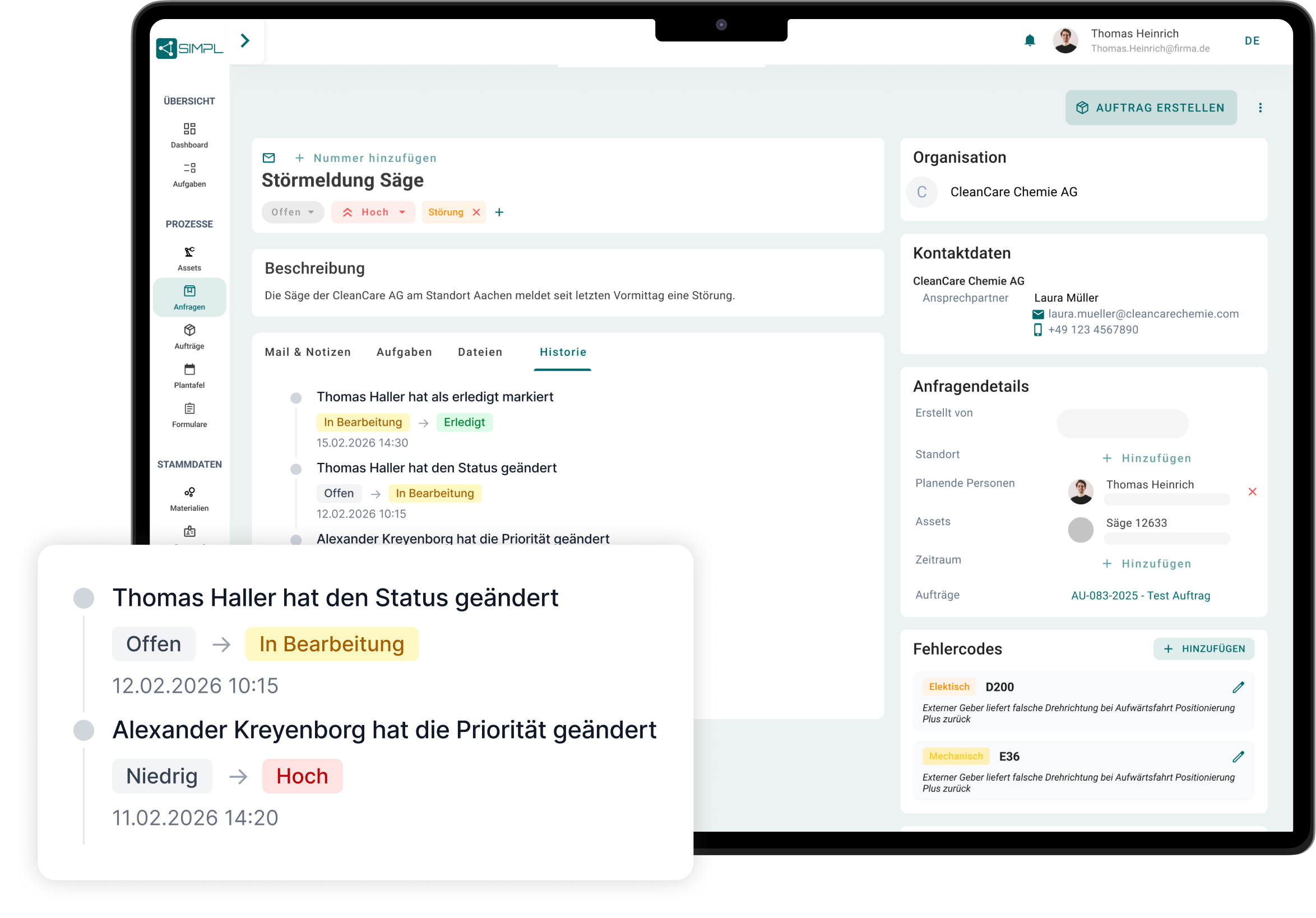
Die Akte, die sich von selbst fortschreibt
Ein Pass, den niemand pflegt, veraltet. In SIMPL landen Service, Umbauten und Teile automatisch in der Akte, aus dem Alltag heraus.
Each assignment and report automatically updates the history
Modifications and replacement parts remain traceable
No overwritten records, no duplicate entries
Roles & Access
Du bestimmst, was öffentlich ist
Je Datenfeld legst du fest: öffentlich sichtbar oder nur intern. Genau die Logik, die der Produktpass mit seinen Zugriffsstufen verlangt.
Visibility per field: public or internal
Internal data remains technically protected, not just hidden
Sharing Permissions per Document: You Decide What the Scan Shows

AASX Export (Administration Shell)
Dein Kunde will den Pass in seinem System?
SIMPL exportiert je Maschine ein standardkonformes AASX-Paket: digitales Typenschild, technische Daten und Doku, maschinenlesbar für OEMs und Plattformen.
AASX Export Based on the Administrative Shell (AAS)
Standardized Submodels: Nameplate, Technical Specifications, Documentation
Units and Document Classes According to Standards (UNECE, VDI 2770)

The Path to the Product Passport
In vier Schritten zum Produktpass, im eigenen Tempo
You don’t have to wait for your legal document. Every step pays off immediately in terms of service, and in the end, you’ll have your passport.

1. A unique ID and QR code for each machine
2. Organize properties and documentation, including units and versions
3. Set visibility: public, internal
4. Launch a pilot with a product family, then scale up
Entdecke das Potenzial vom digitalen Produktpass
Erfahre in 30 Minuten, wie deine Maschinen eine digitale Akte mit QR, Typenschild und Doku bekommen, als Fundament für den Produktpass.

Unverbindliches Gespräch mit unseren Experten
An honest assessment: what will be relevant to you and when
Persönlicher Ansprechpartner
No preparation needed, just bring your questions
Frequently Asked Questions About the Digital Product Passport
What is a Digital Product Passport (DPP)?
A digital product passport is a standardized, digital product file with a unique identifier, usually a QR code on the product. It consolidates information such as product identity, technical data, documents, and repair and recycling instructions throughout the entire life cycle, so that operators, service partners, and regulatory agencies can see exactly the information they need.
When will the digital product passport become mandatory, and does this apply to machinery?
There is no uniform date. The legal basis is the EU Ecodesign Regulation (ESPR); the obligations for each product group are established through delegated acts. So far, the only fixed deadline is for the battery passport, effective February 18, 2027. There is no fixed deadline yet for machinery and equipment, but the first delegated acts (including those for iron and steel) are already expected, and experience shows that deadlines tend to be pushed back rather than moved up. Those who establish their database early will be prepared rather than scrambling at the last minute.
What does the EU Machinery Regulation have to do with the product passport?
Machinery Regulation 2023/1230 takes effect on January 20, 2027, and, for the first time, allows manufacturers to provide operating instructions in digital form. While this is not technically a product passport, it is the same building block: structured, digitally accessible product information associated with the product. Anyone who digitizes operating instructions using a QR code has already taken the first step toward the passport.
What is the difference between a product passport and a digital machine file?
The digital machine file is your internal view: everything about a machine, for your team. The product passport is the standardised, outward-facing view of it, with defined data fields and access levels. In SIMPL, the machine file is the data basis from which the passport is generated – with no duplicate maintenance.
Who sees which data in the product passport?
That is up to you. In SIMPL you define for each data field and document whether it is public (visible via QR scan) or internal. EU regulation provides for exactly these access levels: a simplified public view and extended views for service partners and authorities.
What is an AASX export or an Asset Administration Shell?
The Asset Administration Shell (AAS) is the Industry 4.0 standard for the digital twin of a product. An AASX file is the standardised exchange package for it. For each machine, SIMPL exports an AASX package with a digital nameplate, technical data and documents, so that your customers, OEMs or platforms can adopt the passport in machine-readable form.
How do we best get started with the product passport?
Small and concrete: one product family as a pilot. Attach unique IDs and QR codes, structure properties and documents, define visibilities, then test live and roll out to further series. Your personal contact at SIMPL supports the pilot from the data structure through to the QR label