Company
Manufacturer of annealing machinery and equipment used worldwide. Each system is custom-configured and comes with comprehensive documentation.
How a glow-discharge technology manufacturer uses SIMPL to uniformly track its installed base, eliminate printed manuals, and give customers direct access to documentation and service via QR codes.
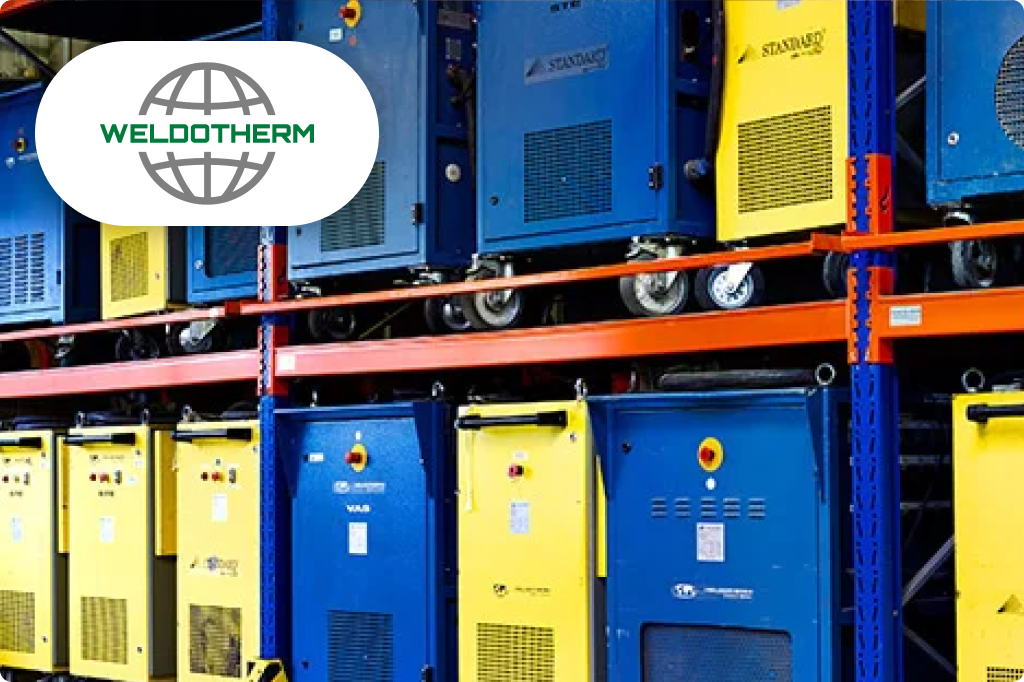
Manufacturer of annealing machinery and equipment used worldwide. Each system is custom-configured and comes with comprehensive documentation.
Documentation is scattered across servers, folders, and printed manuals. There is no standardized installed base. When a customer calls, we first have to gather the necessary information.
Every piece of equipment is centrally tracked, with a QR code on the machine and customer self-service via the customer portal. No more printed manuals.

Since we started using SIMPL, we’ve finally been able to track our annealing equipment and machinery in a standardized way. This gives us a clear overview of our installed base. Customers send inquiries directly via the QR code on the equipment, and we no longer have to print out manuals. This makes things much easier.
Weldotherm develops and manufactures machines and systems for annealing technology—highly specialized products that are used worldwide. Each system is custom-configured and comes with comprehensive documentation: wiring diagrams, operating manuals, maintenance history, test reports, and spare parts information.
Before SIMPL, this documentation was scattered across various locations. Technical documents were stored on the company server, maintenance logs were kept in folders, and operating instructions were provided as printed manuals upon delivery. There was no centralized, unified overview of all delivered systems—the installed base.
This had concrete consequences for the service team: When a customer called, it wasn’t always immediately clear which system was involved, what its configuration was, and what maintenance had been performed on it so far. The team first had to gather information from various sources before it could provide a well-informed answer. And on the customer’s end, the printed manuals often gathered dust in a cabinet next to the system—if they could even be found at all.
With SIMPL, Weldotherm has established a fully digital service process, ranging from system registration to customer communication and document management.
Every Weldotherm system is now centrally recorded in SIMPL, complete with a unique identifier, technical specifications, configuration data, maintenance history, and all documents. What used to be scattered across servers, folders, and individual files is now consolidated in one place. When a request comes in, the service team can view all the information about the system on their screen in seconds.
Every system we deliver comes with a QR code. The customer scans it and is taken directly to the customer portal, where the information is filtered specifically for that system. There, the customer can access instructions, view the maintenance history, identify replacement parts, and submit a service request. The request is received by the team, complete with all the relevant system context.
The user manuals, which used to be included with every shipment as a thick handbook, are now available digitally through the customer portal. This saves on printing costs and logistics expenses. And the documentation is always up to date: When updates are released, all that’s needed is to update the system, rather than sending out a new printed version.
Circuit diagrams, test reports, maintenance reports, and acceptance documents are stored centrally in SIMPL and are accessible to both the internal team and the end customer via the customer portal. Every change is traceable, and every document is assigned to the correct system.
Documentation that had been scattered across servers and folders was consolidated into a unified installed base
Each system, including its configuration and history.
A QR code from printed manuals was scanned at the facility
The customer scans it, and everything is there: instructions, service history, and replacement parts.
Back-and-forth emails turned into self-service via the customer portal
Inquiries are received with the full context of the system.
Faster Processing of Service Requests
Because each request is automatically linked to the correct piece of equipment, there is no need to ask for serial numbers, configurations, or past maintenance records.
Printed manuals per equipment shipment.
Inquiries with the full attachment context for each scan.
right next to the facility.
Dortmund | © 2026 SIMPL Technologies GmbH